
Oct 18, 2026OEM Development & Quality
Why Bike Bags Fail: Five Failure Modes and the Spec Fixes
Bike bags fail in five predictable places: seams, hardware, coatings, abrasion, closures. The data behind each - and the PO line that fixes it.
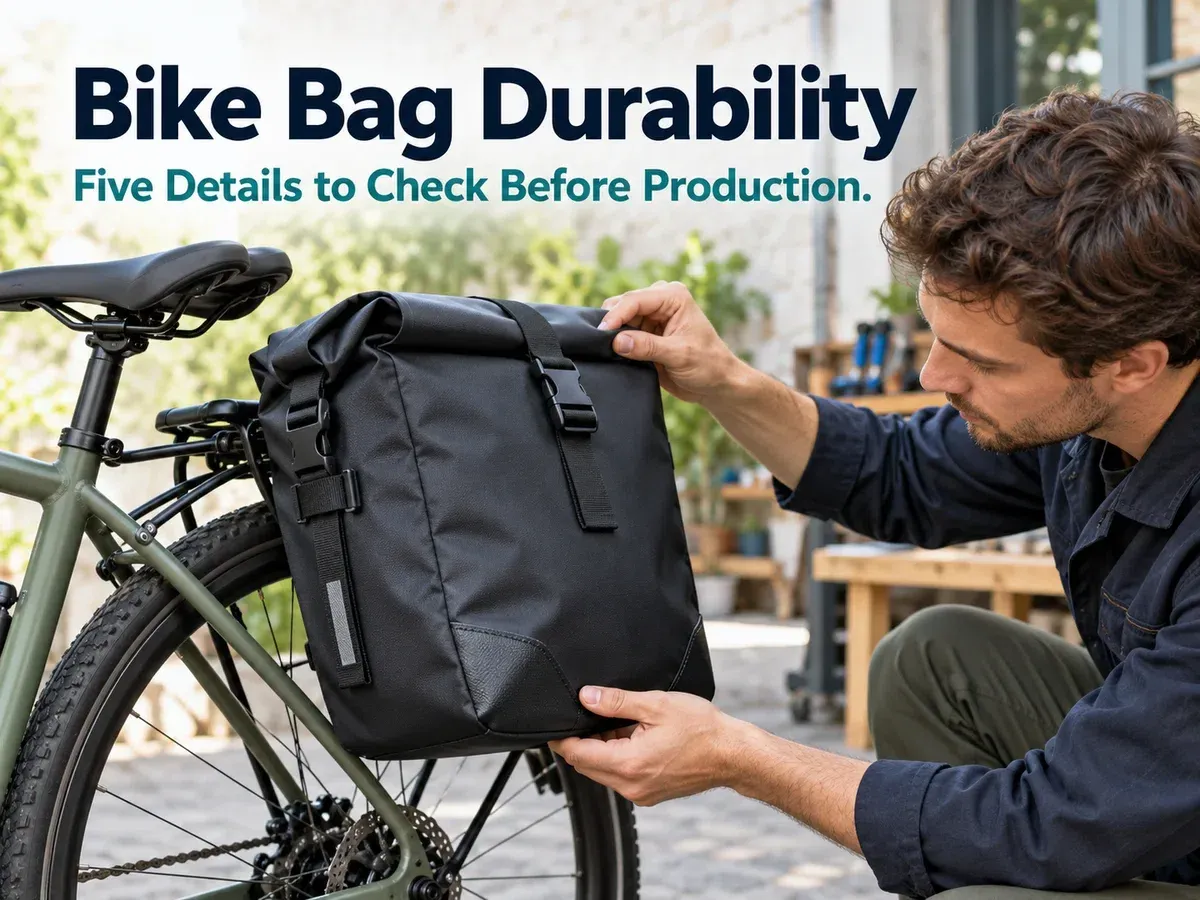
Bike Bag Durability: Five Details to Check Before Production
A bike bag can use a good fabric and still leak at a seam, slip on its straps or wear through where it touches the rack.
For bicycle brands developing a new accessory, the useful question is not simply “Is it durable?” Ask how the finished bag is built for the load, weather and daily handling it will face.
Start with these five areas before approving the sample.
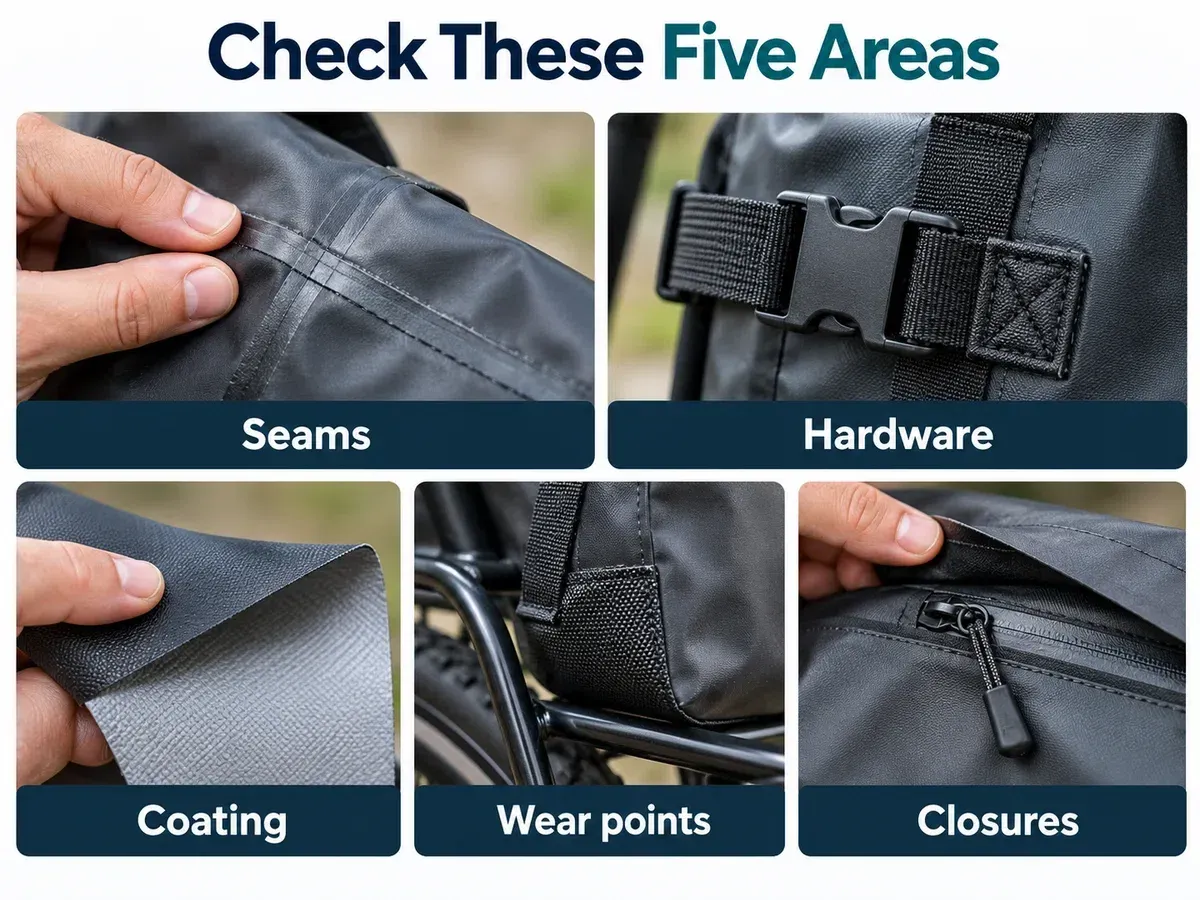
1. Seams: Check How the Fabric Is Joined
A fabric’s water-resistance result does not establish the performance of its stitched seams. Needle holes, seam intersections and poorly protected openings can create routes for water to enter.
Ask which seams will be exposed to rain and how they will be treated. Depending on the material and design, the options may include seam tape, suitable sealing treatments or welded construction.
Confirm before ordering: the construction at each critical seam and how rain protection will be checked on the finished sample.
2. Hardware: Check the Attachment, Not Just the Buckle
A buckle rating tells only part of the story. Webbing routing, stitching, reinforcement and the way the bag moves on the bicycle all need attention.
Specify the component model and review the complete attachment under the intended load. Discuss repeated opening, adjustment and vibration where relevant.
If a supplier provides a cycle-test result, ask what was tested and how. A rack vibration test and a buckle opening-and-closing test are different tests; their cycle counts are not interchangeable.
Confirm before ordering: the hardware model, attachment construction and relevant load and repeated-use checks.
3. Coatings: Consider Heat, Humidity and Storage
The fabric face may look sound while the coating underneath starts to crack, flake or separate. Polyurethane coatings can be vulnerable to hydrolysis—degradation associated with prolonged heat and humidity.
Ask about the proposed coating and any ageing-test evidence relevant to the product’s use. A report should identify the tested material, method, conditions and assessment criteria.
Accelerated test results should not be presented as a guaranteed number of years outdoors.
Confirm before ordering: the coating specification and the evidence used to assess its suitability for your market.
4. Wear Points: Inspect the Bag on the Bike
Look at the lower corners, rack contacts, strap loops and any point where the bag can rub as it moves. These areas may need reinforcement or a change in attachment position.
Abrasion reports can help compare fabrics tested under comparable conditions. They do not predict product lifespan, and Martindale and Wyzenbeek cycle counts should not be treated as equivalent.
Confirm before ordering: the reinforcement locations and the contact areas to inspect during the loaded fit check.
5. Closures: Match the Opening to the Weather
A convenient opening still needs suitable protection for its position on the bag.
For example, YKK describes AquaGuard as water-repellent, not waterproof or watertight. The zipper choice alone therefore does not justify calling the complete bag waterproof.
Review the closure, zipper ends, surrounding seams and any protective flap together. Check that the opening closes correctly when the bag is loaded.
Confirm before ordering: the closure model, installation details and agreed rain-exposure check.
Put the Details into the Production Specification
Record the agreed materials, seam construction, hardware, reinforcement and closure details. Keep the approved sample as the reference, with clear inspection criteria for the features that matter most.
This gives both the brand and the factory something practical to check during production.
Developing a Bike Bag for Your Range?
Send Yagoobag your drawing or reference photo, target quantity and intended use. Include the expected load, weather exposure and any problems you want the new design to solve.
We can review the construction with you, discuss material and component options, and quote against the agreed specification.
Samples typically take 7–12 days, depending on the design and material availability.