
Oct 18, 2026Outdoor Materials & Components
Nylon vs. Polyester for Bike Bags: Which Should Your Brand Choose?
Nylon or polyester for your custom bike bags? Compare fabrics, coatings and attachment details by use and budget. Send us your design for material recommendations before sampling.
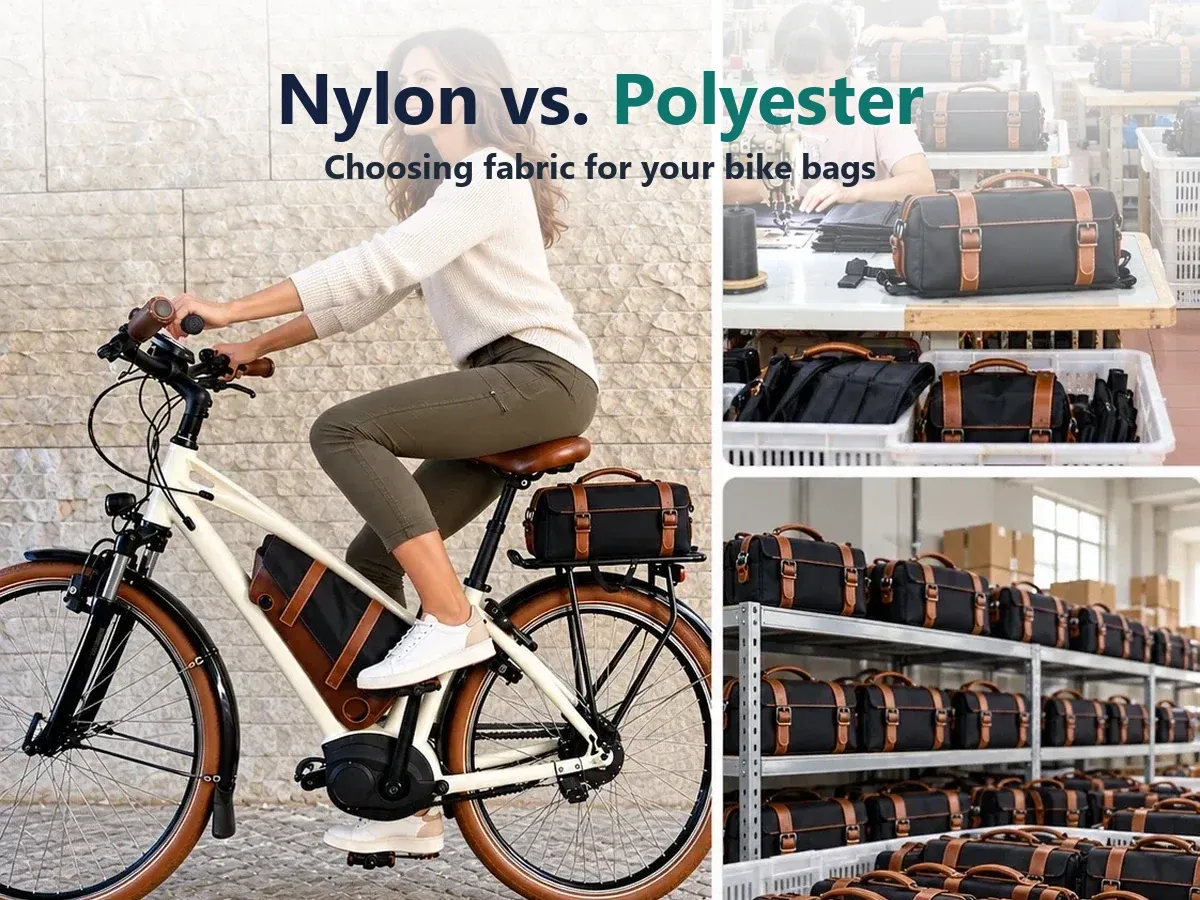
Nylon vs. Polyester for Bike Bags: Which Should Your Brand Choose?
The right fabric depends on where the bag goes, what it carries and how it attaches to the bike. Nylon can be a good option for demanding wear areas. Polyester is worth considering for outdoor exposure and straps where stretch needs to be limited.
But the fibre name alone will not tell you how a finished bag performs. Fabric construction, coating, stitching and attachment design all matter.
Here is how to narrow down the options before sampling.
Start With the Product, Not the Fabric
A cargo-bike rain cover and a compact tool bag face different conditions.
Before choosing materials, define:
Use: daily commuting, occasional trips or commercial deliveries?
Exposure: stored indoors or left outside?
Load: light personal items or heavier equipment?
Contact: where will the product rub against the frame or rack?
Budget: what is the target price and order quantity?
These answers help your supplier recommend a material you need, rather than simply a heavier or more expensive one.
When to Consider Nylon
Nylon is worth evaluating for bags and reinforcement areas that face repeated rubbing and demanding use.
For example, CORDURA® Classic uses high-tenacity nylon 6,6 yarns and is designed for abrasion and tear resistance. That describes a specific engineered fabric—not a guarantee that every nylon fabric performs the same way.
Potential applications include:
Bag bases and exposed corners.
Reinforcement around mounting points.
Compact tool bags and frequently handled panels.
Ask for test results for the actual fabric offered. “Nylon” and “heavy duty” are not complete specifications.
When to Consider Polyester
Polyester is worth evaluating for sun-exposed products and webbing where low stretch matters.
Sailrite’s polyester webbing guidance highlights UV resistance and limited stretch, including in wet conditions. Its nylon webbing guidance describes greater elasticity and recommends polyester where higher UV resistance is needed. These are useful selection cues; the exact webbing still needs checking.
Potential applications include:
Compression and adjustment straps.
Outdoor covers.
Bag panels where shape retention is a priority.
For covers, also check colourfastness, coating durability and fit. Choosing polyester alone does not establish outdoor service life.
Compare the Complete Material
Component What to compare
Main fabric Weight, weave, tear strength and abrasion results
Waterproof layer Coating or laminate, water resistance and ageing performance
Webbing Width, thickness, stretch and buckle compatibility
Mounting points Reinforcement, stitching and movement under load
Outdoor surfaces UV-related performance and colourfastness
Compare finished material specifications—not just nylon against polyester.
A fabric upgrade may add little value if the bag still moves against the rack or the attachment concentrates force on a small area.
Does Nylon or Polyester Make a Bag Waterproof?
Neither fibre name proves that a finished bag is waterproof.
Review the complete construction:
What coating or laminate is specified?
How are seams sealed or joined?
How does the opening keep water out?
What happens around zippers and attachment points?
What water-resistance test will the finished sample undergo?
A fabric test report answers questions about the tested material. Your sample needs to answer questions about the bag.
Should You Mix Materials?
Using different materials in different parts can be worth evaluating.
For example, a design might combine a polyester body, nylon reinforcement at wear points and low-stretch polyester webbing. Another design may work better with one main fabric and carefully positioned reinforcement.
Add complexity only where it solves a clear problem. Extra materials can also affect sourcing, minimum quantities and production cost.
What to Confirm Before Bulk Production
Approve the material specification alongside the sample—not afterwards.
Record the fabric reference, coating, colour, webbing, reinforcement and agreed checks. Evaluate the sample with its intended load and mounting arrangement, including the areas likely to rub or move.
This gives both the buyer and factory a clearer basis for production approval.
Need Help Choosing Materials for Your Bike Bag?
YAGOO BAG develops custom bike bags, cargo-bike rain covers, seat cushions and other fabric accessories for e-bike and cargo-bike brands.
We can help you compare material options against your design, intended use and target budget before sampling.
Send us a product photo or drawing and tell us what it needs to carry. We’ll help you narrow down fabric, coating and reinforcement options.
Custom orders start from 300 pieces. Samples typically take 7–12 days, depending on material availability and development requirements.
Discuss Your Custom Bike Bag Project