
Oct 18, 2026Outdoor Materials & Components
Fabric Test Reports for Bike Bags: What Buyers Should Check
Buying custom bike bags or cargo bike rain covers? Learn what fabric test reports prove and what to check before approving materials and samples.
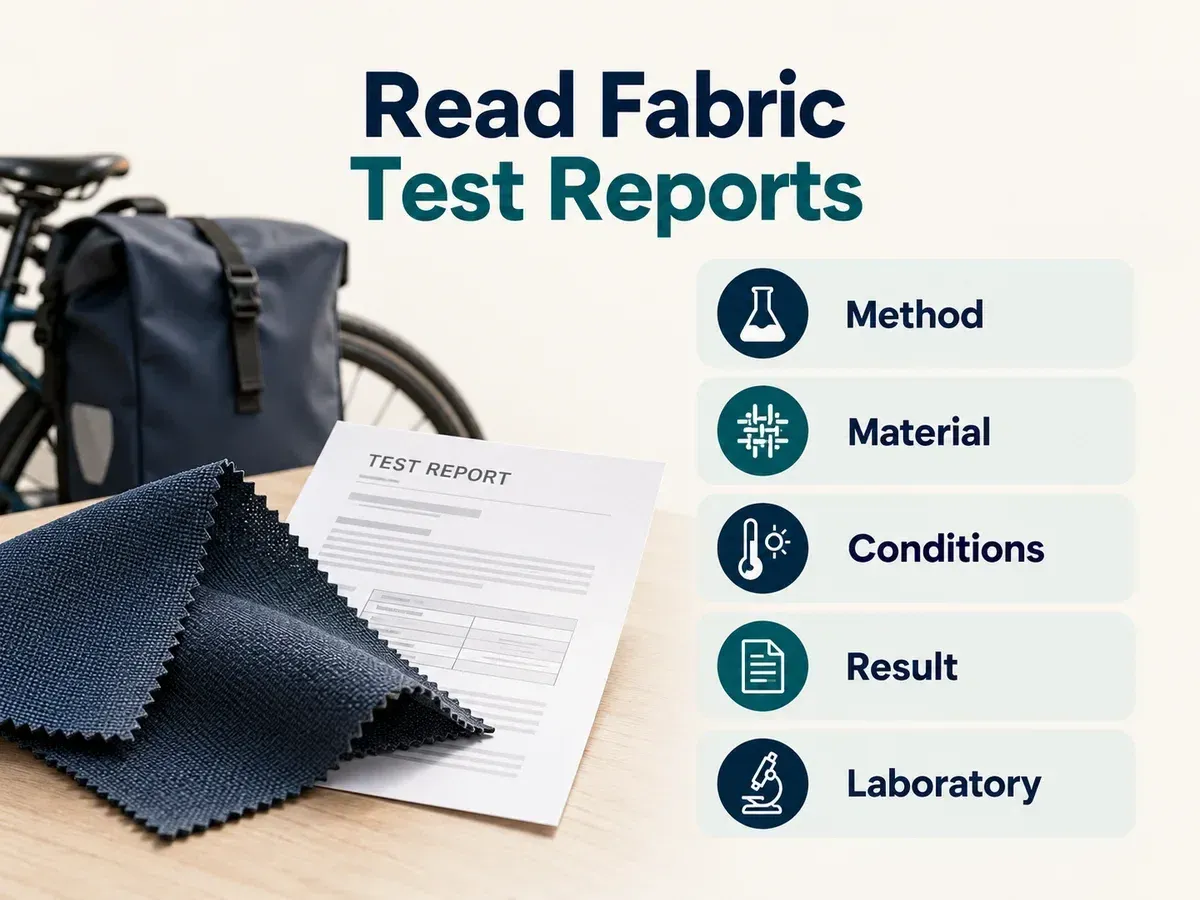
How to Read Fabric Test Reports for Bike Bags and Rain Covers
A fabric rated to 10,000 mm hydrostatic head does not automatically make a waterproof bike bag.
That result describes the tested fabric under specific laboratory conditions. Your finished product also has stitching, zippers, openings and attachment points—all of which need checking.
For brands sourcing custom bike bags, cargo bike rain covers or seat cushions, here is what to look for before approving a material.
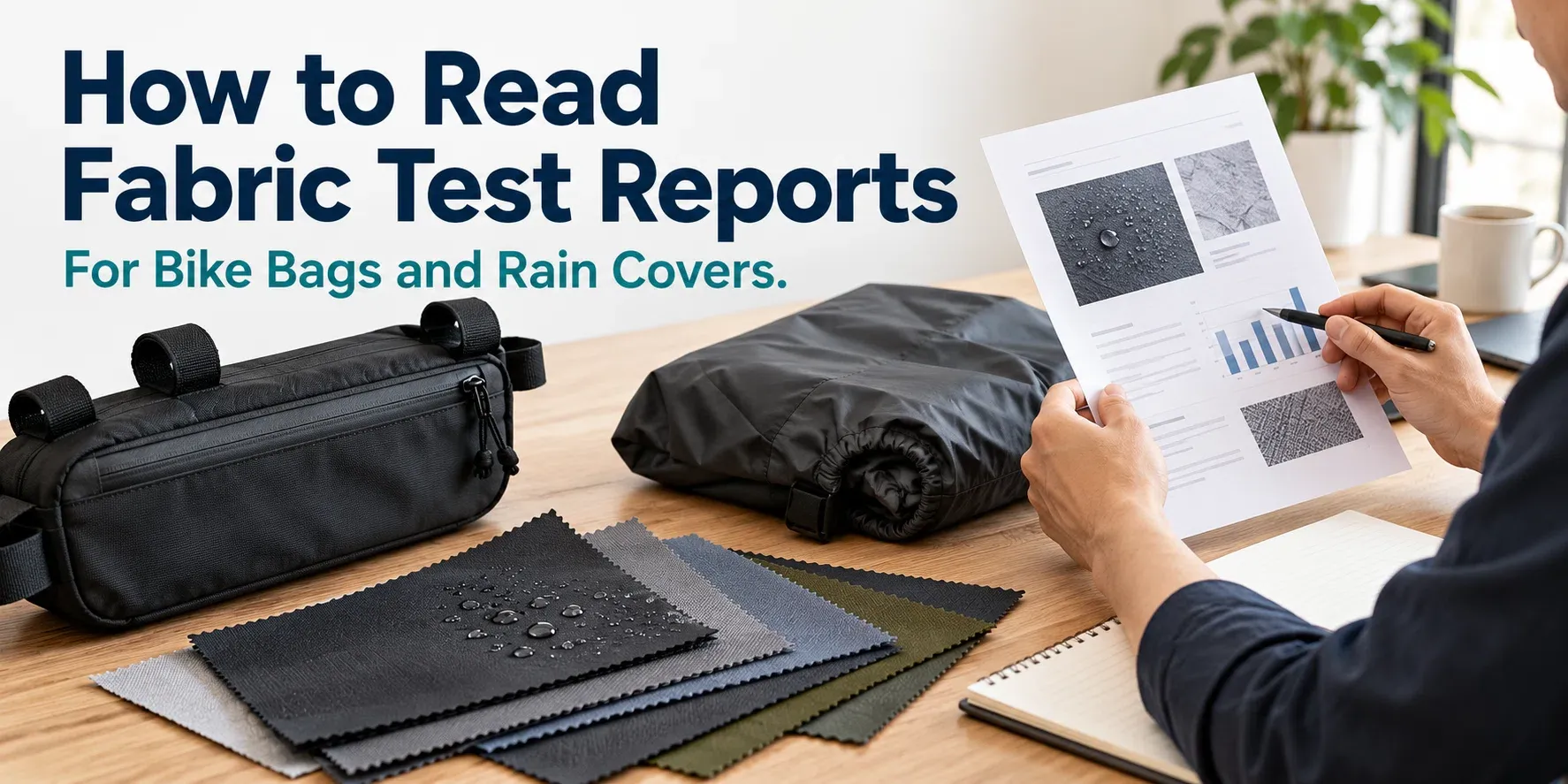
Check These Five Details First
Before comparing headline numbers, check the information behind them:
What to check | What to ask your supplier |
|---|---|
Test method | Which standard and version were used? |
Tested material | Does the fabric code, coating and colour match your specification? Can the sample be traced to a batch? |
Test conditions | Was the sample tested new, or after washing, abrasion or ageing? |
Result and requirement | What was the acceptance limit, and what result was recorded? |
Laboratory | Who issued the report, when, and is the relevant test within the lab’s accreditation scope? |
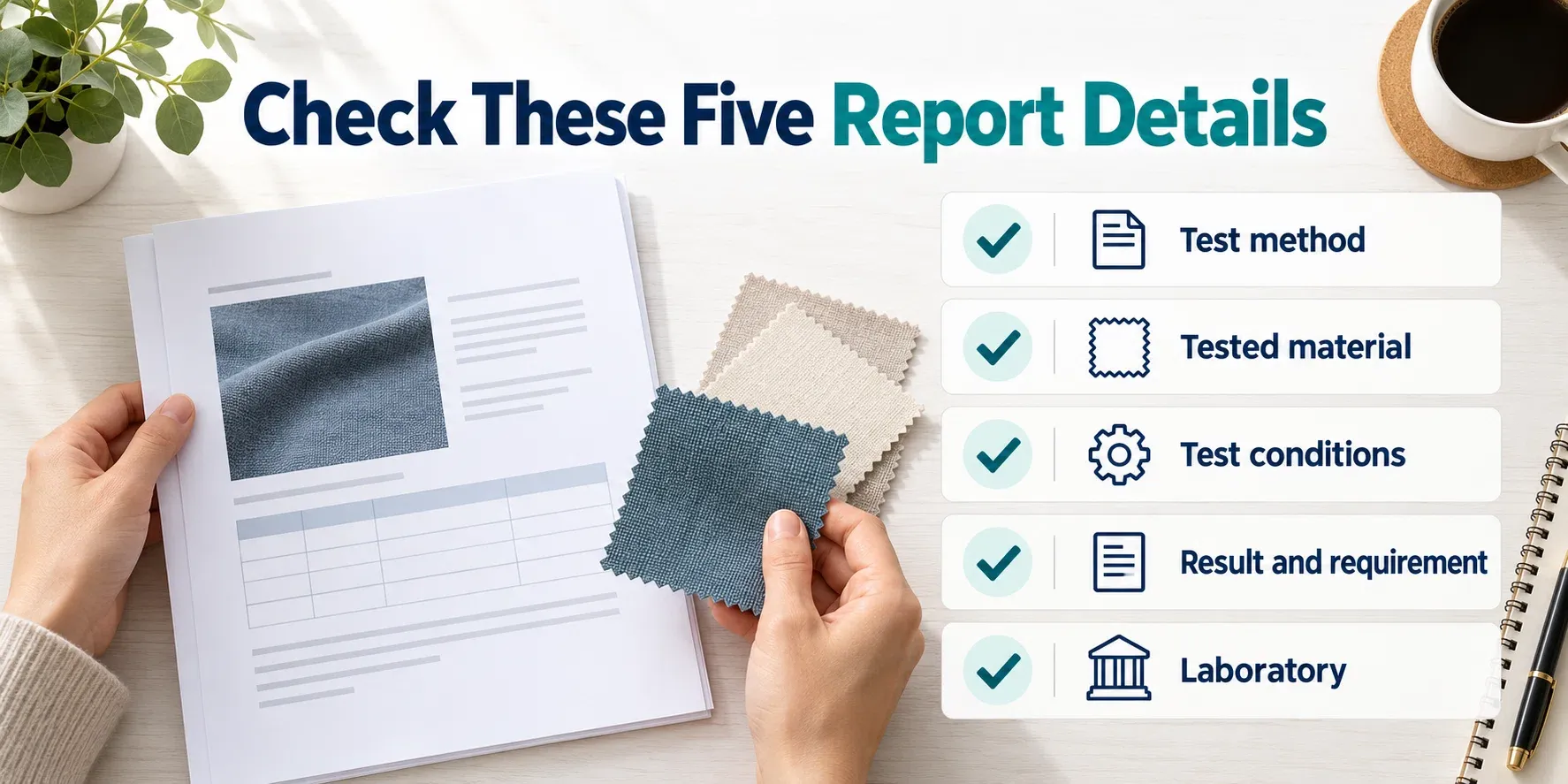
A missing detail is a reason to ask questions. A report for a different coating or fabric construction may tell you little about the material being quoted.
Water Repellency Is Different from Water Resistance
These terms often appear together, but they describe different properties.
A spray test, such as AATCC TM22, assesses surface wetting. It helps show how readily water wets the fabric face.
A hydrostatic pressure test, such as ISO 811 or AATCC TM127, measures resistance to water passing through the fabric under pressure.
A fabric can shed droplets well without providing enough resistance for the intended product. Ask which property was tested rather than accepting “waterproof” as a complete specification.
High Abrasion Numbers Do Not Tell You Product Life
Abrasion results help compare materials tested under comparable conditions. They do not tell you how many years a bag will last.
Martindale and Wyzenbeek use different methods, so their cycle counts should not be treated as equivalent.
For a bike bag, also inspect the places where wear will concentrate: frame contact areas, mounting straps, corners and attachment points. Reinforcement in the right place may matter more than a higher headline number.
Check Outdoor Durability Separately
Water resistance alone does not establish outdoor durability.
For products exposed to sun and damp conditions, discuss colourfastness, coating ageing and any relevant UV exposure testing. Ask what was assessed after exposure: colour change, cracking, strength or water resistance.
A colourfastness result does not establish that the coating or fabric strength remained unchanged. Test hours should not be presented as a guaranteed number of years outdoors.
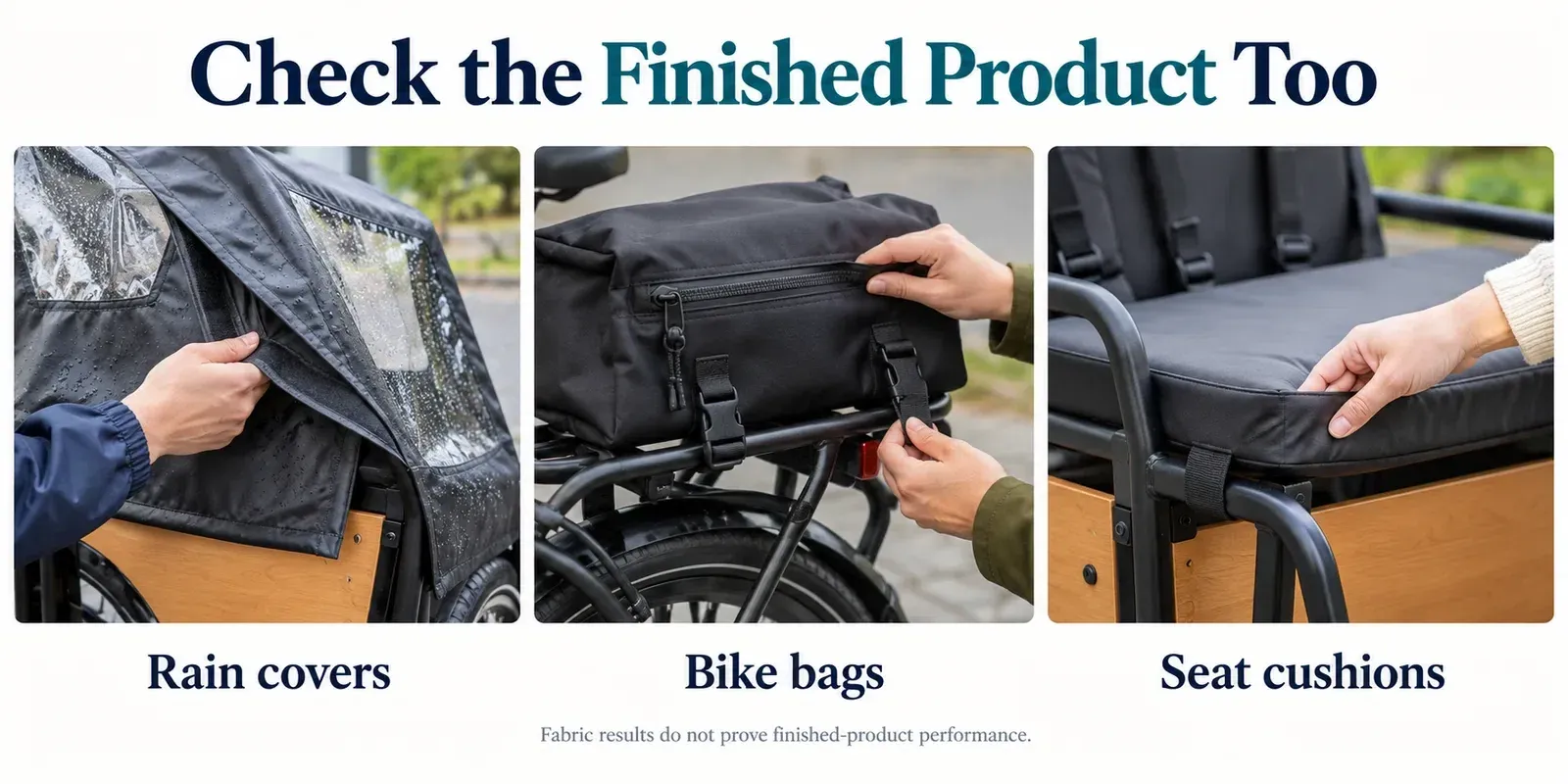
Approve the Finished Sample, Too
Once the fabric is selected, check the actual product:
- Rain covers: seams, window joins, openings and places where water collects.
- Bike bags: closures, mounting points and performance under the intended load.
- Seat cushions: seams, attachment security and whether water can enter or remain trapped.
Agree on the sample checks and acceptance criteria before bulk production. Keep the approved material specification and relevant reports as references for future orders.
Developing a Custom Bike Accessory?
Send Yagoobag your drawing or reference photo, intended use and any available fabric report. We can discuss material options, seam construction and the sample checks your project needs.
Samples typically take 7–12 days, depending on the design and material availability.